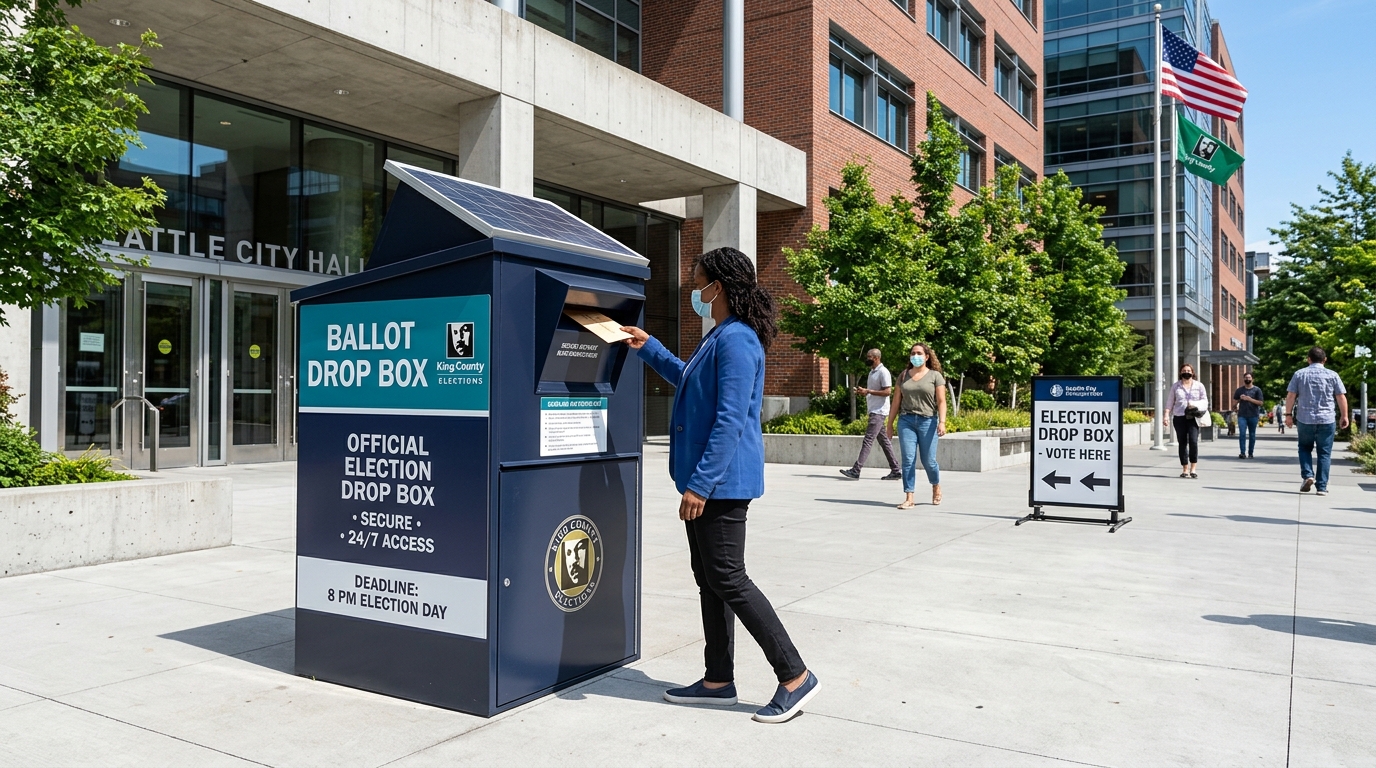
The Regulatory Requirement
Under Proposal 2022-2 and Public Act 85 of 2023, Michigan expanded and standardized absentee ballot drop box access and security. Each municipality must have at least one drop box, and one for every 15,000 registered voters. Drop boxes must be locked, anchored, clearly labeled, and accessible 24 hours during the 40 days before Election Day.
Key Legal Requirement
Video monitoring is required during the 75 days before each election and on Election Day. Note: "video monitoring" does not include video data storage under Michigan law — storage is a separate operational decision.
Decision Makers
City/Township Clerk
Legal responsibility
Municipal Manager
Budget, vendor approval
IT/Security Staff
Camera specs, network
Bureau of Elections
Procurement, reimbursement
Law Enforcement
Incident response
Human Accountability & Verification Standard
Most failures are not technology failures — they are human failures. Our 3-tier framework ensures that every alert is received, acknowledged, assigned, and resolved.
System Verification
Verify dashboard status daily during election monitoring period
Performed by:
Documentation:
Alert Review
All alerts reviewed, acknowledged, and resolved within SLA
Performed by:
Documentation:
Exception Management
Any failure produces incident ticket with full audit trail
Performed by:
Documentation:
Risk Categories of Noncompliance
Understanding the severity levels helps municipalities prioritize their compliance efforts.
Administrative
Missing daily review, late acknowledgment
Operational
Camera offline >24h, missed weekly verification
Evidence Risk
Recording failure, broken chain of custody
Election Integrity
Tampering ignored, failure to produce evidence
Escalation & Response Standards
| Event | Response Time | Escalation |
|---|---|---|
| Camera Offline | 30 Minutes | Clerk + Vendor |
| Recording Failure | 30 Minutes | Clerk + Vendor |
| Storage Warning | Same Day | Clerk |
| Tampering Alert | Immediate | Clerk + Law Enforcement |
| Evidence Request | 4 Hours | Clerk |
| Cybersecurity Event | Immediate | IT + Clerk |